M&A Coverage Monitor
Track a deal as the media tells its story. The M&A Coverage Monitor follows a specific transaction through every phase, from speculation to completion, and shows you how each party is being framed, who the key voices are, and what the narrative suggests about deal trajectory.
What it does
M&A coverage has conventions all its own. It frames buyers against targets, debates valuation and premiums, weighs deal rationale, factors in regulatory scrutiny, and tracks the reactions of multiple named parties with very different interests. Aggregate sentiment across a deal is misleading, because the buyer might be framed positively while the target's existing strategy is implicitly criticised. This monitor reports per party, follows the deal through its phases, and marks the announcement and regulatory milestones so you can see exactly how the story turned at each point.
The questions it answers
- How is the coverage framing this deal, as a strategic combination, a defensive consolidation, a hostile takeover, a troubled deal, or something else?
- How is each named party being received, separately, in deal-specific coverage?
- Is the strategic rationale the parties communicated being accepted, modified, or rejected?
- How are stakeholders reacting, from target and buyer shareholders to employees, regulators, customers, suppliers, and competitors?
- Where is opposition coming from, and what does the regulatory and political environment look like across jurisdictions?
What's in the report
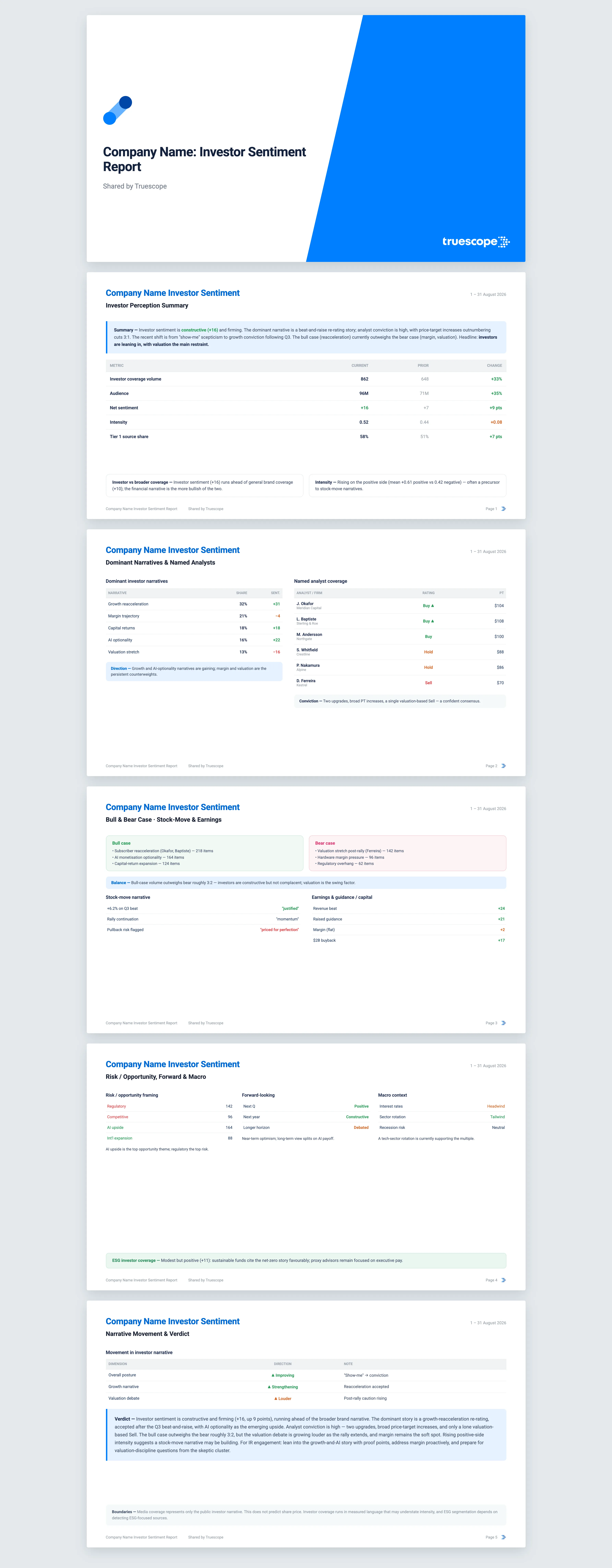
The report opens with a deal coverage summary naming the current phase and dominant framing, then works through the evidence. Time-series charts mark the announcement and regulatory milestones with reference lines. Per-party sentiment is reported separately throughout, and findings are cited back to source coverage.
- A deal coverage trajectory chart showing volume across the analysis window with phase annotations.
- A deal framing analysis scoring each framing type by coverage share, plus per-party sentiment and per-party narrative themes.
- Valuation and price coverage, and a strategic rationale view showing whether the announced narrative is being accepted, modified, or rejected.
- Stakeholder reaction coverage across every category, analyst views on the deal, regulatory and antitrust coverage by jurisdiction, and competitor reaction patterns.
- Stakeholder opposition, the speculation and leak pattern showing which outlets were ahead of the story, multi-jurisdictional coverage, and the narrative shifts that often matter most.
- Post-deal integration coverage for completed deals, comparable deal references, and a closing deal verdict in editorial voice.
Who it's for
This monitor serves investor relations and corporate communications teams managing a live transaction, and the executives and advisers steering it. It suits the company defending a deal, the acquirer building the case, or the IR lead who needs to brief the board on how the deal is landing across markets and stakeholder groups.
Why Truescope Analyst
Tracking a deal by hand means someone reading wire copy, trade press, and local coverage across multiple markets and time zones, trying to hold the buyer, the target, the regulators, and the opposition in view at once. It is exhausting and easy to get wrong, and a missed narrative shift can catch leadership off guard. General AI tools see only the article in front of them, so they cannot reconstruct a deal arc or tell you when the framing turned. Truescope Analyst reasons across your full media dataset, separates each party, maps framing and stakeholder reception, marks the announcement and regulatory milestones on the timeline, and cites every finding back to source coverage. It runs in minutes, repeats as the deal moves through its phases, and is built into your subscription for the whole team.
Frequently asked questions
Does it work at every stage of a deal?
Yes. You set the deal status, whether speculation, announced, in regulatory review, completed, or abandoned, and the report adapts. Integration coverage appears only once a deal completes, and the speculation and leak view applies to deals that began as rumour.
How far back can it track the deal arc?
The analysis can draw on up to the last 13 months for coverage already in your Truescope inbox, or the last 90 days for global data not yet matched to your workspace. For longer arcs it uses daily intervals around active phases such as the announcement and regulatory milestones, and weekly intervals through quieter stretches.
Can it predict whether the deal will go through?
No. It describes the publicly visible deal narrative and is an observation, not a prediction. Private negotiations and regulatory deliberations are partly or fully invisible, and some coverage reflects the parties' intended framing rather than independent analysis.