
Communications teams that consistently protect brand reputation can potentially see narrative shifts forming before the rest of the organization does.
They know which journalists are driving a story, how sentiment is trending across media types, and whether a developing narrative requires a response or may resolve on its own.
That level of visibility separates true media intelligence from traditional media monitoring tools, and it’s critical for comms professionals who need the ability to walk into a room with answers before anyone has finished asking the questions.
In this post, we’ll break down what public relations and communication teams need to know when it comes to using media intelligence for brand reputation, including how the right tools can help you monitor and shape perception proactively.
Key takeaways
- Brand reputation is shaped by narrative momentum. Protect your reputation by tracking how earned media and mentions evolve across media types, who's amplifying them, and where sentiment is shifting your brand perception.
- Media intelligence adds the context that monitoring alone cannot provide. Sentiment analysis, journalist profiling, competitive intelligence benchmarking, and the ability to synthesize thousands of results into actionable insight without reading every clip are what turn raw coverage data into something a comms team can act on.
- Speed determines whether you shape the story or respond to it. When coverage spikes, comms teams that can identify the signal within minutes have a structural advantage over teams that are still compiling clips the next morning.
Why brand reputation matters in 2026
Reputation has always been built on trust, and trust has always been fragile. But now, dynamics have shifted in ways that make media intelligence and brand monitoring across diverse media channels more critical than it was even two years ago.
The 2026 Edelman Trust Barometer found that consumer trust in brands isn’t exactly stellar (and neither is their trust in much else at the moment). In the United States, for example, only 60% of consumers trust domestic brands, and only 44% trust brands from other countries. There’s also been increased respondent distrust in major news organizations and their governments.
If something goes wrong, media coverage can accelerate loss of trust. A single news clip can be posted on social media, where it can gain major visibility as people share and send the content.
And now, a large language model tool like Claude, Gemini, or ChatGPT might access a recent, seemingly small story and use that to shape how it’s talking about your organization, especially since they sometimes favor newer content.
Communications teams that can identify a developing narrative in real time and brief leadership within hours have a structural advantage over teams that are still assembling coverage reports the next morning.
How media intelligence supports brand reputation management
Media intelligence answers the harder questions that monitoring alone cannot, including:
- How is the narrative evolving in real time
- Who is shaping the story
- What PR and comms teams need to do about it
These capabilities matter most in three key areas.
Narrative tracking and early trend detection
One of the most valuable functions a media intelligence platform offers when it comes to brand reputation management is surfacing narrative shifts before they get ahead of you.
Going beyond keyword alerts to track how stories evolve across media types and news outlets, how brand sentiment changes over time, and when coverage volume crosses a threshold that signals escalation gives comms teams the lead time they need to respond strategically rather than reactively.
Truescope, for example, enriches every article at the entity level. We score relevance, prominence, and sentiment for each brand, person, or organization mentioned.
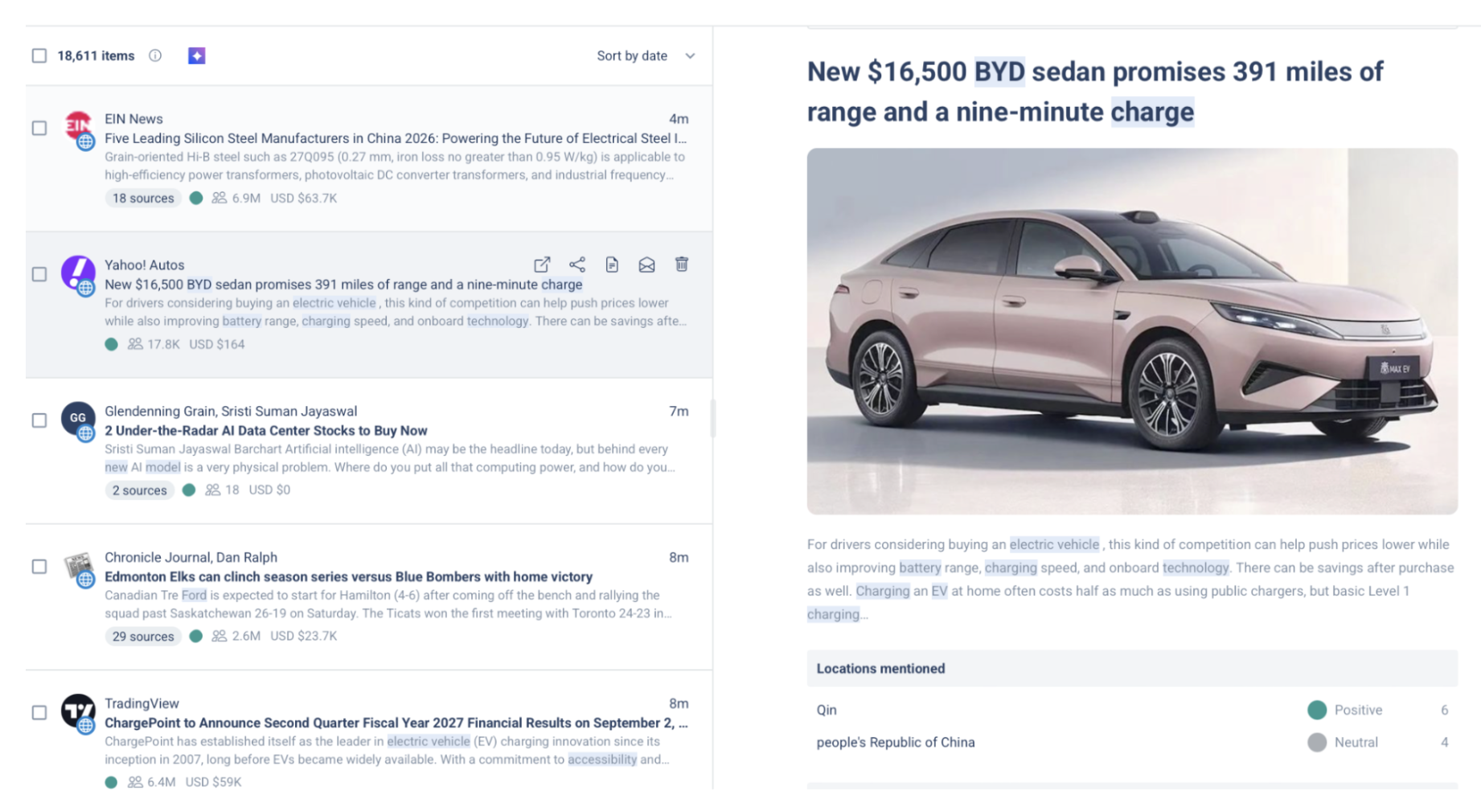
In aggregate across millions of articles per day, comms teams can see whether tone is shifting, which journalists are driving the change, and how their brand is being positioned relative to competitors and industry peers. Your team can even set up real-time alerts so you can move quickly if needed.
Sentiment analysis that reflects reality
Surface-level sentiment scoring, the kind that flags an article as "positive" or "negative" based on keyword proximity alone, isn’t always going to give you the level of nuance that you need.
Real-time media intelligence tools like Truescope, however, can now offer sentiment analysis that reads the full article, understands context, and scores at both the article level and the entity level.
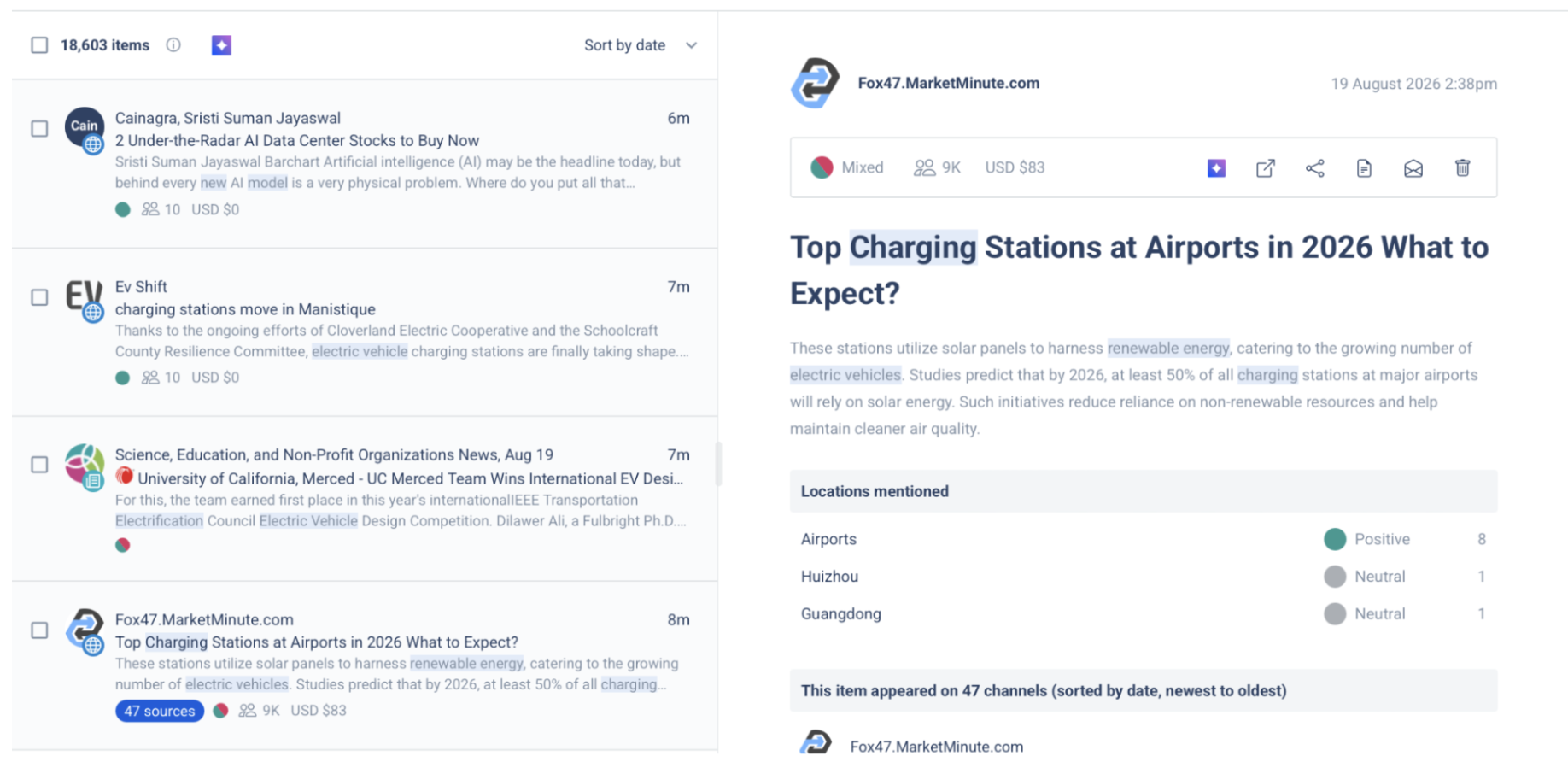
For example, an analyst report ranking the top five companies in your sector might mention your brand alongside four competitors. The article could be positive overall, but if your organization is positioned last or cited as lagging behind, article-level sentiment won't flag that. Entity-level scoring will.
Competitive and industry intelligence
How your organization is covered relative to competitors and the broader industry narrative shapes stakeholder perception in ways that internal metrics alone can't capture. Tracking your own coverage is only part of the picture. You also need to see what your competitors are doing, how their campaigns and announcements are landing, and what conversations are shaping your industry overall.
That means:
- Monitoring competitor product launches, leadership changes, partnerships, and crisis responses to understand how the media frames them compared to you
- Tracking share of voice across your sector to know whether your organization is leading the conversation or getting drowned out
- Keeping an eye on the broader trends driving your industry, including regulatory shifts, emerging technologies, and public sentiment around key issues that could shape public or stakeholder perception
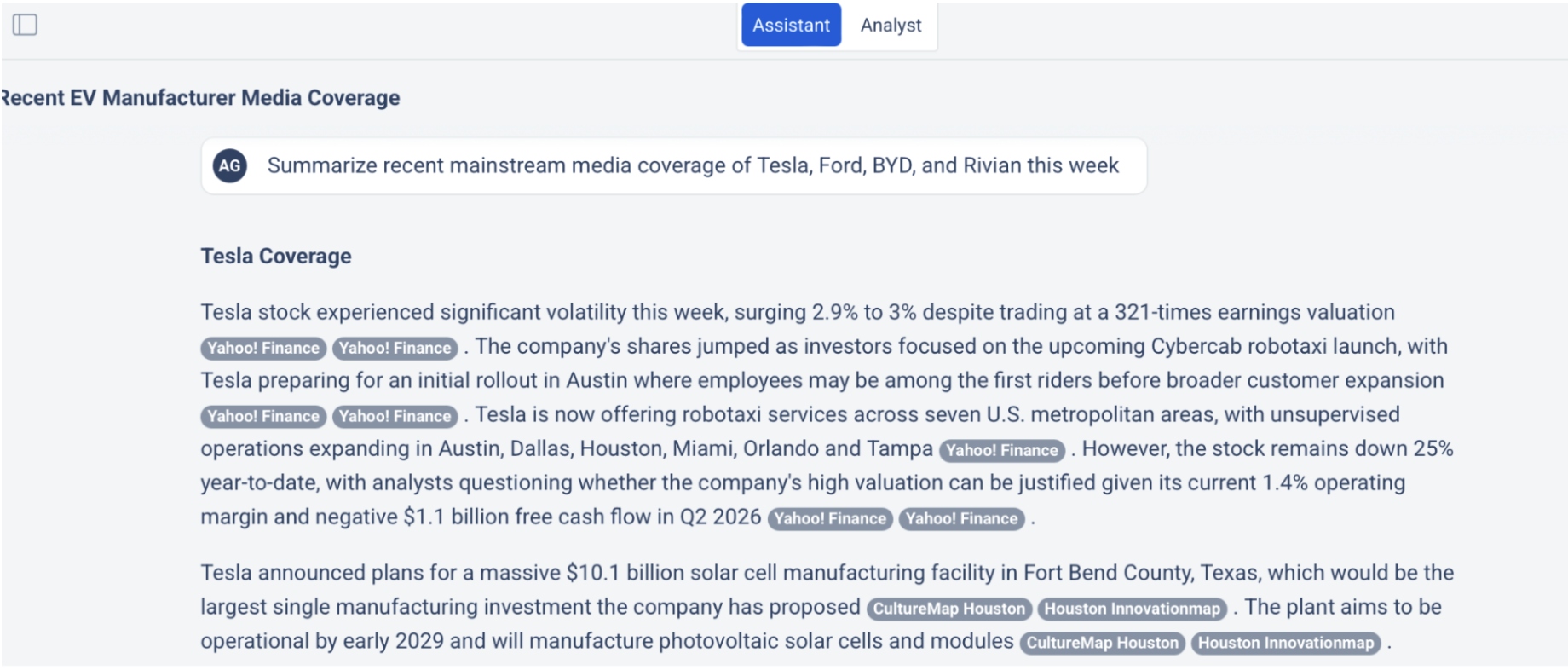
The right AI-powered media intelligence platform can help you do this at scale. Truescope Assistant, for example, can read thousands of articles, identify the key themes, and summarize what matters in minutes. This replaces work that previously required teams of analysts spending days or weeks on the same task.
What to look for in a media intelligence platform for reputation management
When evaluating platforms for brand reputation intelligence, you want a fast-acting media intelligence tool that gives you the breadth and speed of coverage that you need. These are the capabilities you need:
- Near real-time enrichment across all media types. Coverage needs to be read and scored for sentiment, relevance, and prominence within minutes of publication if you want to be able to act quickly. This applies to online news, broadcast, print, and social.
- Entity-level analysis. The platform should identify and score the specific brands, people, and organizations mentioned in each article rather than assigning a single AI-powered sentiment analysis score to the whole piece. Tracking how your brand is positioned relative to competitors within the same coverage means you need the ability to get granular.
- AI that reads and synthesizes. The most useful AI in media intelligence reads your full coverage set, identifies the key themes and narrative threads, and produces structured analysis that a comms professional can act on immediately.
- Automated, customizable reporting. Brand reputation management involves keeping multiple stakeholder groups informed, from the CEO and board to the broader organization. Look for fully customizable and automated reports that can be branded, scheduled, and tailored to different audiences. This will save your team significant time and ensure that the right people see the right information quickly.
- Dedicated human support. Dedicated account managers with actual communications experience understand the workflows, the pressures, and the specific outputs that comms teams need to produce, and that expertise matters most during high-volume coverage events when the team needs to move fast.
How to use Truescope media intelligence for brand reputation monitoring
You need to see everything that's being published about your brand across every media type, understand what it means, and get that intelligence to the right people fast enough to act on it. That starts with comprehensive, near real-time coverage.
Truescope ingests and enriches online news, broadcast television and radio, licensed print, and social media, then reads every article and scores it at the entity level for relevance, prominence, and sentiment.
This means your team can track how your brand, your competitors, and the key voices in your industry are being covered and positioned across thousands of articles per day. When a narrative starts to shift, you can see it in the data before it reaches your stakeholders.
When you need to go deeper, Truescope Analyst turns a single question into a structured, source-cited analysis in minutes. Ask about share of voice, journalist coverage patterns, or sentiment trend analysis across a campaign in plain language. The platform investigates multiple angles simultaneously and delivers an output that's ready to brief leadership on without hours of manual work.
Perhaps best of all? Every Truescope account also comes with a dedicated account manager who has real experience in communications and media analysis, so your team has knowledgeable support when you need it.
Want to see how Truescope compares to other media intelligence solutions? See how we compare to Cision and Meltwater.
How media intelligence changes the reputation conversation
When comms teams have access to real media intelligence, they’re better able to monitor and influence brand health and reputation.
Instead of talking about what happened last week, your team can now report on how the narrative is evolving, which journalists are shaping it, where the competitive landscape is shifting, and what the organization should do next.
You need real-time insights into all earned media that can shape public perception, including social media, review sites, forums, print, podcasts, and television. The right tool should be able to offer all of this and more.
See how Truescope's media intelligence platform supports brand reputation strategy. Book a demo to see how it works for your team.
See how you can get more signals and insights from your media intelligence platform




See how you can get more signals and insights from your media intelligence platform


.svg)