
Published in PRovoke Media on 8 September, 2026. Written by Camillia Dass
SYDNEY — Truescope is launching in Australia on 1 October, seven years after the media intelligence company was founded in Sydney, with a dedicated local team and its full suite of media monitoring, social listening and AI products.
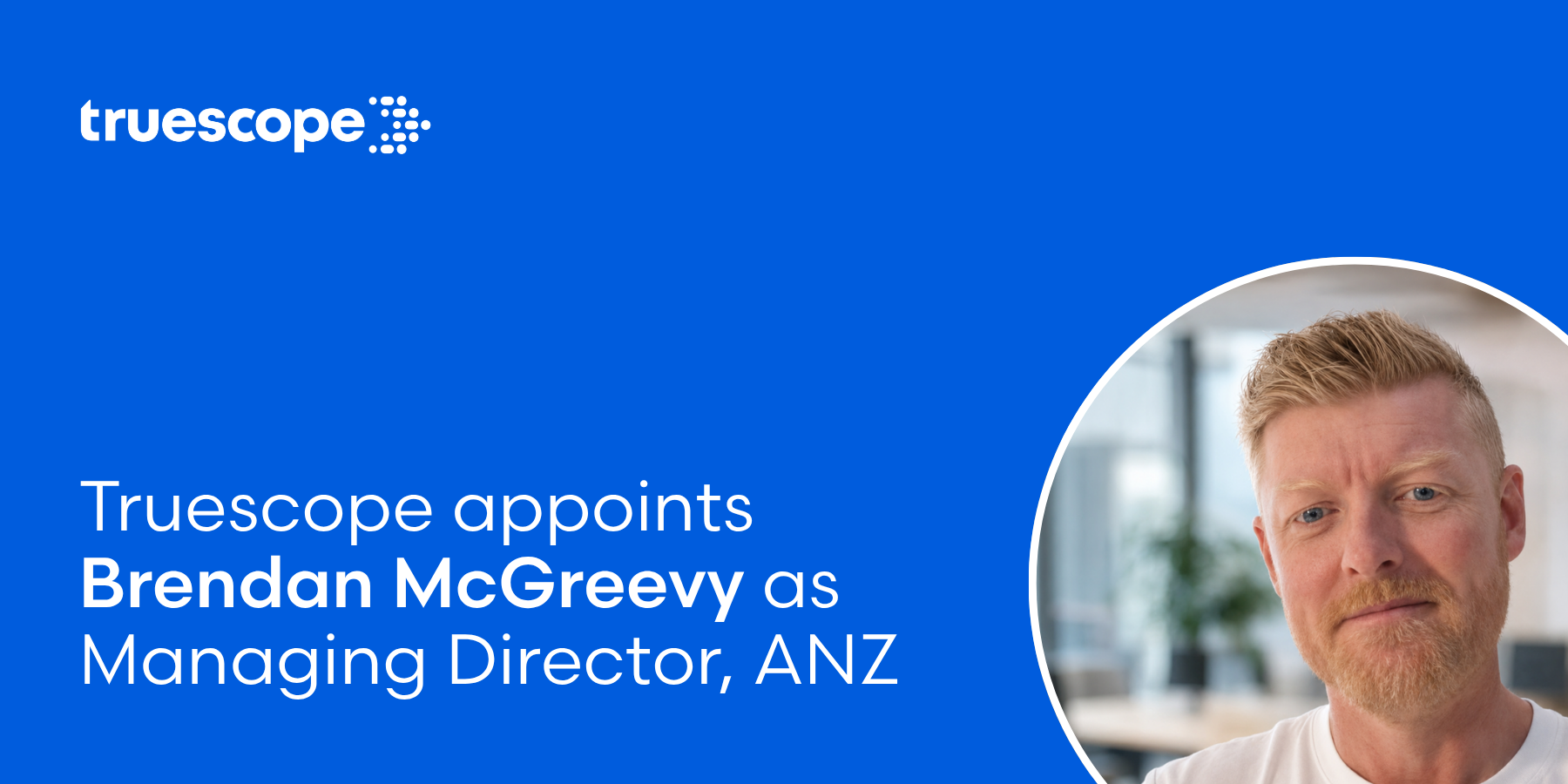
The company has appointed former Isentia and Affinda executive Brendan McGreevy as managing director for Australia and New Zealand to lead the expansion. McGreevy spent more than 16 years across Media Monitors, Slice Media and Isentia before spending the past seven years helping to build Australian AI technology company Affinda and its Draftable business.
McGreevy will lead Truescope's local team of analysts and client success staff, with further hires underway as the company prepares for the October launch. Truescope already has a 12-person development team in Australia, while Croll told PRovoke Media that additional local hires were being finalised.
“It's not going to be fly in, fly out,” Truescope CEO and co-founder John Croll told PRovoke Media. “It's going to be a good team down here with experienced media intelligence people who we've either worked with before or have been in the industry for a good period of time.”
The launch will give Australian clients access to Truescope's comprehensive media monitoring and social listening capabilities, as well as its Truescope Assistant and Analyst AI tools. Croll said the business would combine its technology with a local customer success operation rather than operate as a pure software-as-a-service model.
Truescope enters a mature Australian media intelligence market dominated by established providers, but Croll has ambitious growth plans. He said the company, which has more than 600 clients across its existing markets, would like to have “a couple of hundred” Australian clients on its platform by 2028.
The decision to enter Australia followed more than 30 interviews with communications, PR and public affairs leaders across corporate, government and agency teams. According to Truescope, those conversations repeatedly surfaced frustration with long-term contracts and a perceived lack of innovation among existing platforms.
Croll told PRovoke Media that clients were also looking for more relevant information, delivered closer to real time, rather than being forced to sift through large volumes of monitoring results.
“It's got to be near real time, so they can be in the story, engaged in the story, and trying to influence that story,” he said, adding that clients also wanted access to customer success teams that could respond quickly when issues emerged.
Croll said Truescope had built its platform knowing it would need to give clients sufficient reason to switch from incumbent providers, with a particular focus on relevance and moving media monitoring beyond simply telling communicators what happened.
“Instead of just saying what's happened, which is where monitoring has been for 100 years, we're very much around what does it mean,” he said.
Truescope uses natural language processing, sentiment analysis and other enrichments to analyse content, with Croll arguing that communicators increasingly need insights in real time rather than waiting days or weeks for analysis reports.
That shift is becoming more important as AI reshapes both media intelligence and the work of communications teams themselves. In June, PRovoke Media reported the launch of Truescope AI, which introduced Assistant and Analyst, two AI agents built specifically for communications teams and integrated into the company's media intelligence platform.
The tools allow users to query Truescope's aggregated media data in natural language and generate analysis including sentiment breakdowns, competitive intelligence, executive briefings and crisis reports. Truescope has since developed templates for communications tasks including crisis management, ESG and brand reputation, designed to produce consistent outputs even as the underlying media data changes.
Croll said that consistency addresses one of the challenges communicators face when using general-purpose AI tools: the same prompt can produce materially different outputs each time it is run.
“The data changes because we're pulling in millions of stories a day, but the template doesn't,” he said. “That's how we stay ahead of this curve to make ourselves a destination for these insights.”
Croll also expects media intelligence providers to increasingly coexist with AI systems being developed internally by large communications teams. For organisations building their own tools, he said Truescope's role could shift towards supplying its media data through data exchanges that allow it to be combined with other internal metrics and information.
For other organisations, he sees an opportunity for media intelligence platforms to become the primary AI interface for working with public communications data.
“How do we make our clients the most informed people in the room? That's just what drives us always,” Croll said.
Truescope is also developing an AI visibility product specifically for corporate communications, focused on how earned and owned media influence visibility in AI-generated answers. Croll said the product is approaching beta testing and will examine factors including the authenticity and authority of sources, as well as recency.
See how you can get more signals and insights from your media intelligence platform


See how you can get more signals and insights from your media intelligence platform


.svg)