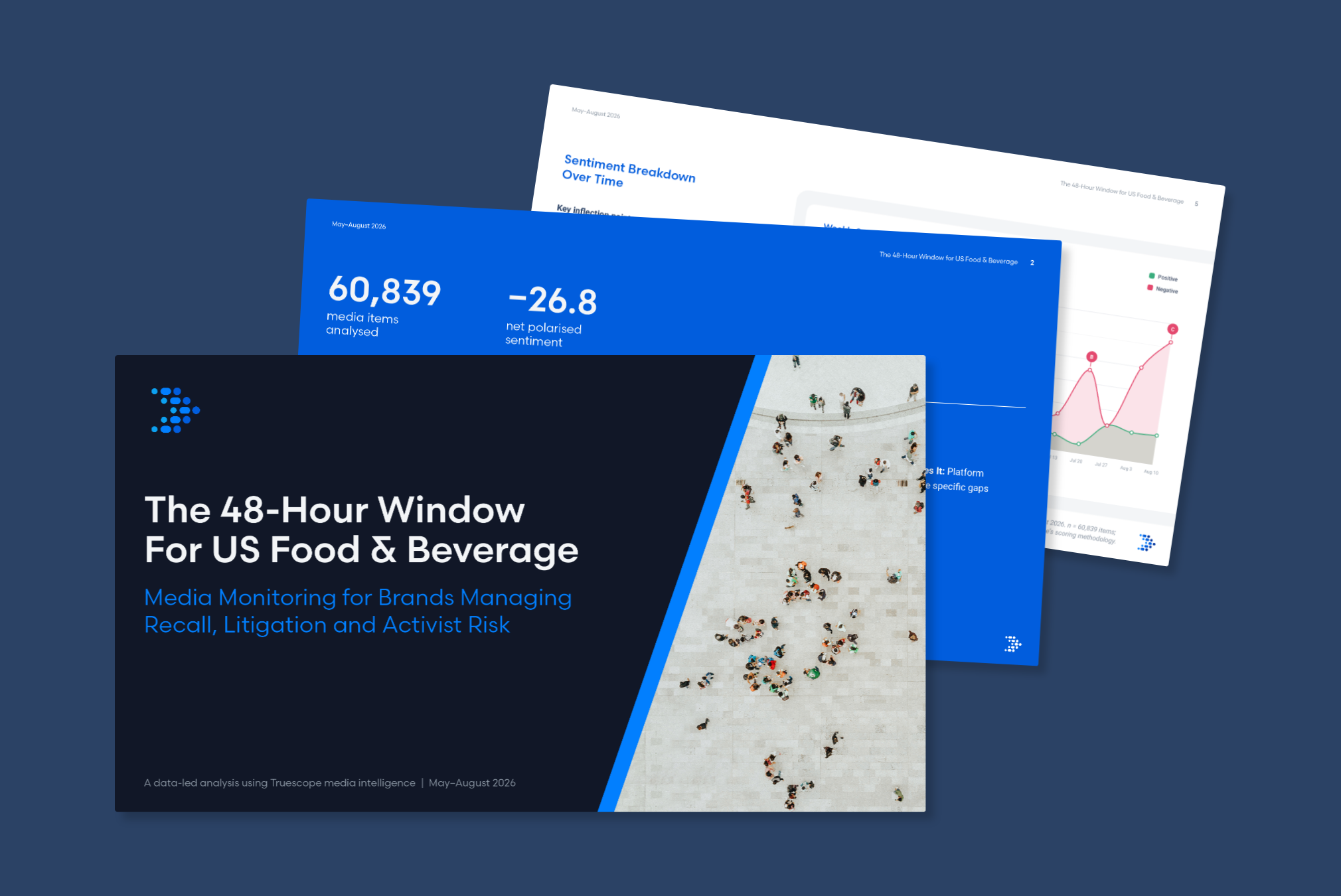
Food and beverage media monitoring built around your own brand name will not see a supply-chain crisis until it reaches your brand, by which point the useful window has already closed. We analysed 60,839 US media items between May and August 2026, a period when net sentiment swung 113 points as three separate outbreaks collapsed into one story of systemic failure. The pattern held throughout: local health notices led the national wires by 24 to 72 hours, and Michigan's health department alone generated 384 items before national outlets moved. When Taylor Farms recalled Mexican iceberg lettuce in July, the recall notice named no retailers, so brand-keyword alerts returned nothing until the supplier was named and the frame was already set. Download the free report to see the three risk mechanics, three worked case studies, and where the proactive 48-hour window actually sits.
- More than half of all coverage (55.8%, or 33,940 items) was contamination-driven, so a crisis playbook that leads with brand reputation rather than food safety is calibrated for the wrong story.
- The first usable signal sits in regional health notices, not national outlets. In the Taylor Farms cyclospora recall, state bulletins and CDC case counts ran 24 to 72 hours ahead of the AP wire, the only window in which positioning is still proactive.
- Broadcast carried 38.8% of volume (23,578 TV and radio items), which text-only monitoring misses entirely, even though broadcast usually sets the consumer frame before online coverage consolidates.
See how you can get more signals and insights from your media intelligence platform


.svg)