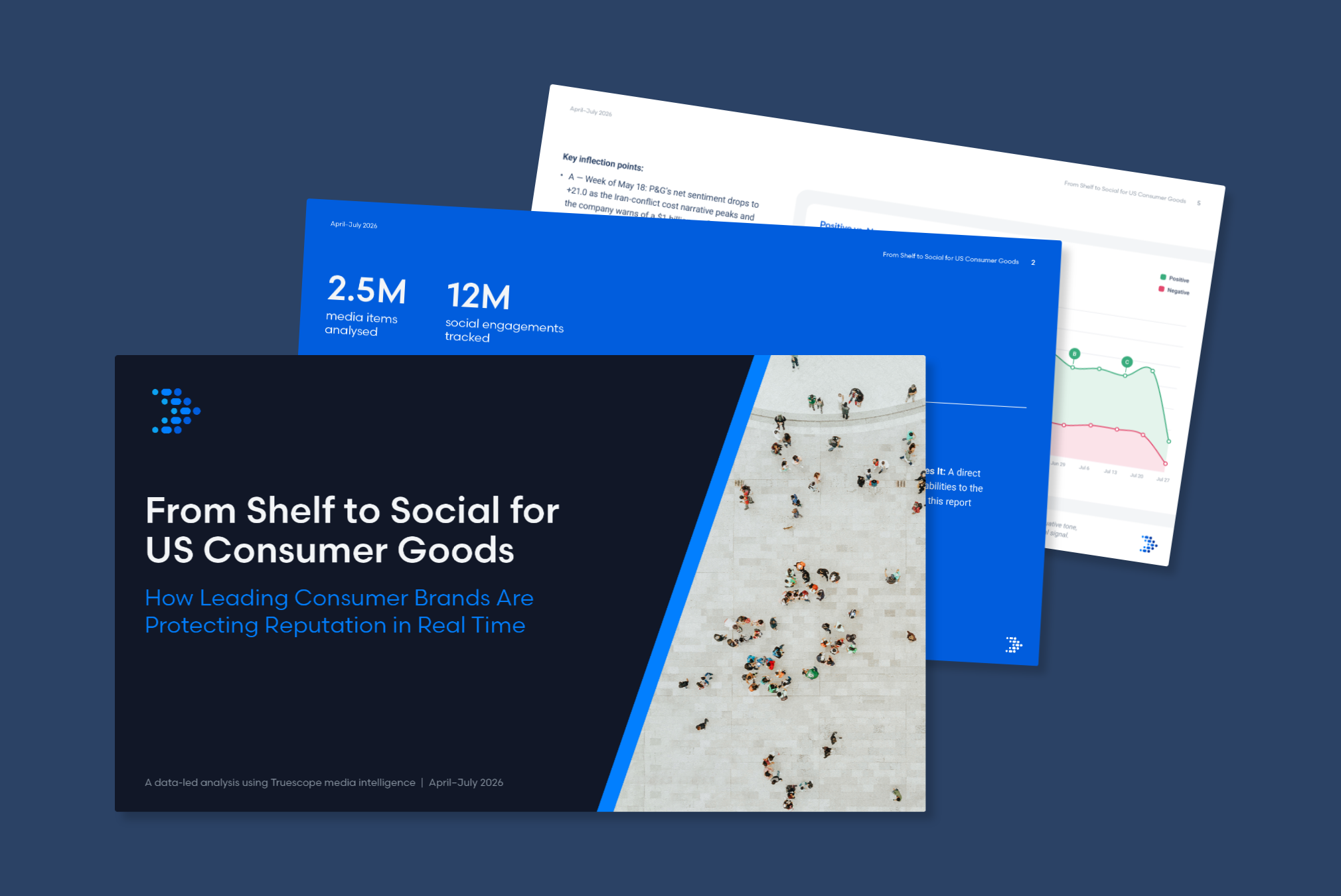
Consumer goods media monitoring has become the difference between shaping a crisis and reading about it once the narrative has set. We analysed 2.5 million media items and 12 million social engagements across US consumer goods over 90 days, and one pattern held throughout: reputational damage now tracks narrative intensity, not coverage volume. Boycott coverage carried a net sentiment of −92.9 from just 1,281 items, while a single viral video turned a Kimberly-Clark warehouse fire into a labour and brand crisis within hours.
Download the report to see the nine risk themes we measured, the three cases where monitoring gaps became reputation gaps, and how leading brands are protecting reputation in real time.
- Volume hides the real damage: boycott coverage carried a net sentiment of −92.9 from only 1,281 items, the most toxic narrative in the sector, while the highest-volume theme (supply chain disruption) stayed broadly factual.
- Social platforms move faster than the newsroom: the Kimberly-Clark warehouse arson shows how one viral video reframed a logistics incident as a labour and environmental crisis, leaving comms teams a two to four hour window to respond.
- Reputation cascades across the brand hierarchy: a class action against Tom's of Maine reached back six years and pulled in parent Colgate-Palmolive, a reminder that monitoring corporate mentions alone leaves sub-brand risk invisible.
See how you can get more signals and insights from your media intelligence platform


.svg)