

The importance of PR has never been more apparent than it is right now. Businesses are operating in an environment where a single news cycle can shift public perception, where a journalist’s framing can define a brand for months, and where silence in the face of coverage can be just as damaging as the wrong response.
Press release monitoring changes that equation entirely. Rather than sending a release into the world and hoping for the best, communications teams that monitor their releases actively understand what happens next. Which outlets picked it up. How it was framed. What sentiment it generated. Whether competitors responded. That closed feedback loop is what separates reactive public relations from the kind of proactive, intelligence-driven practice that moves the needle.
Why Press Release Monitoring Matters
What does press release monitoring tell you in real time?
When a press release goes out, the window for shaping the narrative is short. Journalists file quickly, social media amplifies faster, and by the time a story has been picked up five times, each iteration carries its own interpretation of your original message. Press release monitoring gives PR teams visibility into that process while it is still happening, not after the fact.
The practical value here is significant. Real-time alerts allow teams to identify when coverage is veering in an unintended direction and respond before that framing becomes dominant. They also reveal which media relationships are actually bearing fruit. A release might be picked up by a niche trade publication that consistently drives qualified traffic, or ignored entirely by a major outlet you assumed would cover it. Over time, that data reshapes how teams distribute releases and which journalist relationships they prioritise.
It is also worth noting how much the media landscape has changed. There are more channels available than ever, but fewer dedicated journalists to cover a given beat. Freelancers, newsletter writers, podcasters, and industry analysts now all play a role in how news spreads. Understanding who actually uses your release, in what context and to what audience, has become essential rather than optional. Monitoring emerging trends in coverage also gives teams a read on which stories are gaining momentum, allowing them to contribute meaningfully to conversations rather than arriving late.
Public sentiment is another layer that real-time monitoring captures. Whether a release is generating enthusiasm, scepticism, or indifference tells you something important about how the underlying message is landing. That kind of feedback would previously have taken weeks to surface through surveys or anecdotal evidence. Now it is available almost immediately.
How does press release monitoring protect brand reputation?
Brand reputation management is, at its core, a monitoring problem. Organisations rarely have a crisis because something bad happened, they have a crisis because something bad happened and no one was watching closely enough to catch it early.
Press releases are a particularly sensitive touchpoint in this respect. They are official statements, which means any inaccuracy, misquote, or misleading extrapolation that makes it into coverage reflects directly on the organisation. When a journalist misattributes a statistic from your release, or when a headline mischaracterises your announcement, the potential for reputational damage is real. Without monitoring, those moments pass unnoticed until the damage is already done.
With active monitoring, teams can identify those issues while there is still time to correct the record. More importantly, they can spot the early indicators of a reputational problem, a pattern of negative framing across multiple outlets, an uptick in critical social media discussion, a story gaining traction that contains factual errors. Addressing those signals early is significantly less costly than managing the fallout from a full-blown crisis.
There is also a proactive dimension to this. Brands that monitor their coverage consistently develop a clearer picture of how they’re perceived over time. That understanding informs everything from messaging refinements to spokesperson briefings, and it gives leadership teams the context they need to make informed decisions about when to speak publicly and when to hold back.
How does press release monitoring help you track competitors?
The importance of PR becomes clearest when you look at it through a competitive lens. In most industries, how well you communicate is as strategically significant as how well you operate. Companies that consistently generate positive, well-placed coverage build credibility. Those who do not, fall behind in ways that are hard to quantify until the gap has grown large.
Competitive analysis through press release monitoring gives organisations a window into how competitors are positioning themselves, which stories they are pushing, and how the media is responding. That intelligence is genuinely useful. It shows you which narratives are gaining traction in your space, which announcements tend to generate significant media coverage, and where there are gaps that your own communications strategy could fill.
It also helps with timing. If a competitor has just made a major announcement that has absorbed most of the available media attention in your sector, that is useful for deciding whether to push a release now or wait for a clearer window. Understanding the rhythms of coverage in your industry is only possible if you are monitoring it consistently.
How Truescope Can Help
For all the strategic value that press release monitoring offers, realising that value depends on having tools that can actually keep pace with the volume and velocity of modern media. That is where Truescope’s approach stands apart.
The platform is built around comprehensive data coverage, pulling in content across traditional news sources, digital publications, broadcast media, and social platforms simultaneously. For PR teams, this matters as coverage rarely stays in one channel. A story that breaks in a trade publication can be picked up by a national outlet, amplified on LinkedIn, critiqued on X, and referenced in an industry podcast within hours. Tracking each of those touchpoints individually is not realistic. A centralised monitoring platform makes it manageable.
Truescope’s full suite of features is designed around the realities of PR work. The sentiment analysis capability goes beyond simple positive or negative classifications, giving teams a nuanced read on how coverage is shifting over time and across different audience segments. That level of granularity matters when you are trying to understand whether a messaging change is actually working, or when you need to brief a leadership team on how an announcement has landed.
The competitive intelligence functionality reflects the same logic. Rather than treating competitor monitoring as a separate exercise, Truescope integrates it into the same workflow as brand monitoring. Teams can track how their own coverage compares to competitors, identify moments when a rival’s narrative is gaining ground, and use that context to sharpen their own communications strategy.
Making Press Release Monitoring Central to Your PR Practice
The importance of PR in building long-term organisational credibility is well established. What is less often acknowledged is how much of that value depends on feedback, on knowing what is working, what is not, and why.
Press release monitoring provides exactly that. It turns what would otherwise be a one-directional exercise into an ongoing conversation between an organisation and the media environment it operates in. Teams that do this well are better positioned to respond to challenges, sharper in their messaging, and more effective at building the kind of consistent media presence that has a real impact on brand perception.
Truescope’s insights and reports make this practice scalable for teams of any size. Whether you are running a single campaign or managing communications across multiple markets, the ability to monitor, analyse, and act on press release coverage in real time is the foundation everything else builds upon.
To see how Truescope can support your PR strategy, contact us.
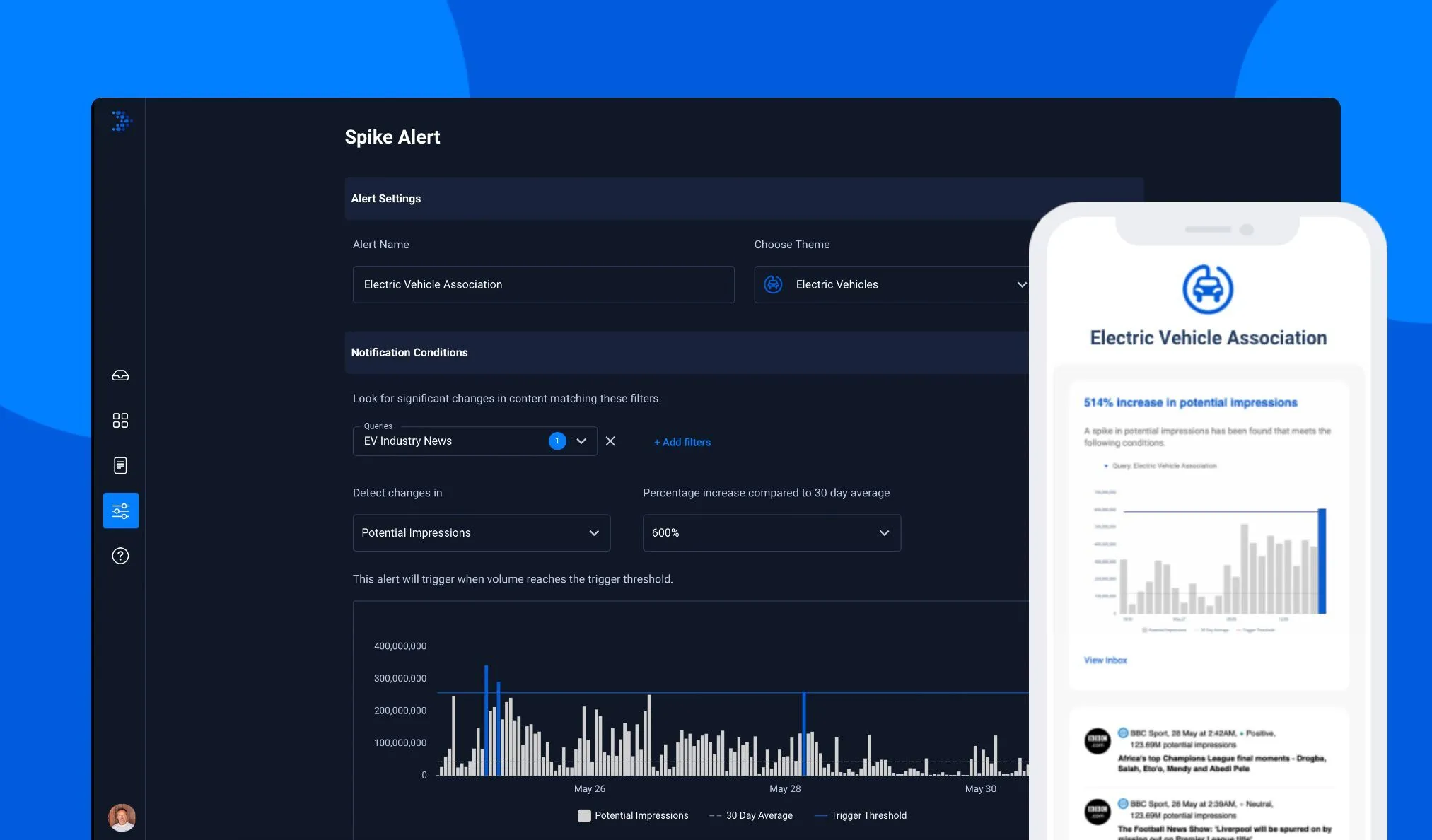
See how you can get more signals and insights from your media intelligence platform



See how you can get more signals and insights from your media intelligence platform


.svg)